
Dreamforce 2026 opens at a moment when Salesforce is moving beyond the idea of AI as a helpful assistant inside CRM. The bigger shift is toward AI agents that can understand business context, use enterprise systems, follow defined controls, and work toward goals over time.
For business leaders, that matters more than any single product announcement. The question is no longer simply whether Salesforce has an AI feature worth testing. It is whether your CRM, data, workflows, permissions, integrations, and operating processes are ready for software that can take action.
This year’s Dreamforce agenda runs September 15–17 in San Francisco, with Salesforce+ providing online access. Salesforce has already signaled several major directions ahead of the event, including job-ready AI agents, a new enterprise AI architecture, expanded headless capabilities, deeper Slack integration, and a larger role for customer-service automation.
Here are seven changes worth watching and what they could mean for a company’s Salesforce roadmap.
1. Salesforce is moving from AI assistants to AI agents that own outcomes
The clearest change is a shift from answering prompts to completing business work. Salesforce has introduced a portfolio of job-ready agents aimed at sales, service, commerce, employee experience, and back-office operations.
That distinction is important. An assistant might summarize a case or suggest the next email. An agent can be given an objective, access the systems it is authorized to use, perform a sequence of actions, and escalate when a human decision is required.
Salesforce says its newer Agentforce runtime is designed to support work that spans days and weeks rather than a single interaction. The first example is an outbound sales agent that can work toward a measurable pipeline goal, retain context between sessions, adjust its plan as circumstances change, and operate within explicit approval boundaries.
For businesses, this raises the bar for automation. The most valuable opportunities are likely to be workflows with a clear outcome, defined business rules, reliable data, and a manageable risk profile—not vague requests to “add AI.”
Teams evaluating these use cases should define the job before choosing the technology. What starts the workflow? What information can the agent use? Which actions are allowed automatically? Where is approval mandatory? What evidence should be stored after each action?
2. Agent governance is becoming part of the Salesforce architecture
As more agents move from experiments into operational systems, governance cannot remain an afterthought. Salesforce has described a Trusted Enterprise AI Harness built around shared context, agency, action, governance, security, and model flexibility, with a proposed AI Control Plane for visibility and control across AI and agents.
The practical lesson is broader than the Salesforce product language: enterprises need a consistent operating layer around AI.
An agent that can update an opportunity, send a customer message, create a case, trigger a workflow, or access sensitive information needs more than a good prompt. It needs identity, permissions, policies, auditability, monitoring, and a clearly defined boundary between autonomous and human-controlled actions.
This is especially relevant for organizations that already have multiple automation projects running across CRM, service, marketing, support, and internal operations. Without a shared governance approach, every new agent can create another isolated set of rules and another monitoring problem.
For a deeper look at the controls businesses should establish before production, read Bytewise Marketing’s AI agent governance guide.
3. Salesforce is becoming more “headless” and less dependent on the CRM interface
One of the most strategic developments is Salesforce’s expansion of Headless 360. The direction is straightforward: business capabilities that live in Salesforce should be reusable by authorized agents, applications, and experiences without forcing every interaction through a traditional Salesforce screen.
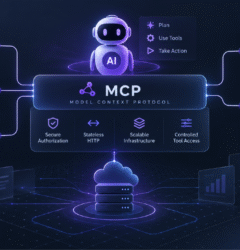
The company has expanded this approach with Model Context Protocol (MCP) servers, Data 360 capabilities, reusable agent skills, broader API access, developer tooling, and headless experiences across its platform.
For technology leaders, this can change the architecture conversation. Instead of building a separate integration for every new AI experience, a business can aim to expose trusted capabilities once and reuse them across different interfaces and agents.
That could make Salesforce more valuable as a system of business logic, not just a system of record. Your customer data, permissions, workflows, validation rules, and process definitions become reusable building blocks for new applications and AI experiences.
The implication is significant for organizations planning custom applications. A CRM strategy that assumes users will always work inside one interface may become less flexible as AI starts to become another interface for business operations.
4. Data quality becomes an AI priority, not just a reporting priority
AI agents are often described as an intelligence problem, but enterprise outcomes are frequently constrained by context. If customer records are incomplete, field definitions are inconsistent, permissions are unclear, or important business information is spread across disconnected systems, an agent can act confidently without having the full picture.
Salesforce’s current architecture work emphasizes trusted context: customer information, business semantics, metadata, knowledge, real-time signals, memory, and process rules working together.
For a business, that means Salesforce data readiness should be treated as part of AI readiness. Before adding an agent to a process, review the quality of the data that process depends on.
- Are customer and account records complete enough for the workflow?
- Are duplicate and conflicting records under control?
- Do teams use the same definitions for important fields and KPIs?
- Can the agent access the information it needs without receiving more data than it should?
- Are business rules represented in systems rather than trapped in undocumented tribal knowledge?
These questions are not glamorous, but they often determine whether an AI project becomes a reliable business process or an expensive pilot.
Bytewise Marketing’s guide to preparing business data for AI covers the same foundation from a data and analytics perspective.
5. Customer service automation is moving toward end-to-end resolution
Salesforce’s acquisition of Fin and its broader customer-agent strategy show how much attention is being placed on service automation. Salesforce says Fin’s customer agent platform can resolve complex customer-experience workflows across channels, while its newer service agents are designed around tasks such as handling support questions, returns, account management, and escalation.
The important business shift is from deflecting simple FAQs to completing more of the resolution process.
That does not mean every support workflow should become fully autonomous. High-value or sensitive cases may still require human involvement. But many organizations can identify parts of the service journey where an agent can gather information, perform standard actions, communicate status, and hand a case to a person with the relevant context already assembled.
The best service automation programs usually start with a narrow, measurable process. Examples include appointment changes, order-status requests, account updates, basic case classification, or information gathering before escalation.
Measure the workflow, not just the chatbot. Useful metrics include resolution rate, escalation rate, time to resolution, rework, customer satisfaction, and the percentage of cases that still require manual intervention.
6. Slack and other work surfaces are becoming part of the CRM operating layer
Another important direction is that business automation is no longer confined to the application where the data was created. Salesforce is expanding its ability to bring CRM capabilities into Slack and other AI experiences through headless architecture and open integration patterns.
That matters because employees often do not want to switch between systems to complete every task. A sales manager may want to ask for a pipeline summary in a conversation, update an opportunity, request a follow-up, or trigger an approved workflow without opening multiple applications.
The long-term opportunity is a more conversational operating model in which the employee’s workspace becomes the entry point and the CRM becomes the governed system behind the action.
But there is a design challenge: convenience must not weaken control. A conversational interface still needs the same permission model, approvals, data protections, and audit trail as a traditional interface.
Organizations should therefore evaluate conversational workflows with the same rigor they would apply to a new API or integration. The user experience may be different; the underlying governance should not be.
7. The Salesforce roadmap is becoming an integration and architecture decision
The biggest takeaway from the current Salesforce direction is that individual features matter less than the architecture underneath them.
Consider a typical enterprise workflow: a lead arrives on a website, the CRM creates a record, enrichment adds company information, an AI system qualifies the lead, a seller receives a recommended action, a proposal is generated, a quote is approved, and the outcome is reported to management.
That is not one AI feature. It is a chain of data, business logic, applications, automation, permissions, and people.
As Salesforce expands agents, headless capabilities, Data 360, integrations, and AI governance, businesses have an opportunity to simplify that chain—but only if the underlying architecture is coherent.
This is where Salesforce strategy becomes a technology leadership issue. Before buying or building the next agent, ask:
- What system is the source of truth for each key data element?
- Which business rules should be deterministic rather than left to AI reasoning?
- Which workflows can be reused by multiple agents and applications?
- How will you monitor agent performance, costs, failures, and human escalations?
- What is the rollback plan when an automated action produces the wrong outcome?
If those questions are difficult to answer, the organization may need architecture and process work before it needs another AI pilot.
What businesses should do after Dreamforce 2026
The right response to Dreamforce is not to copy every new capability that appears on stage. Instead, use the event to review your current Salesforce and automation roadmap.
Start with three layers.
Layer 1: Identify high-value work
List repetitive workflows that consume employee time, create customer friction, or slow revenue operations. Prioritize processes where success can be measured and the acceptable level of risk is clear.
Layer 2: Fix the foundation
Review data quality, integrations, permissions, automation rules, process ownership, and reporting definitions. AI will amplify the strengths and weaknesses of the systems underneath it.
Layer 3: Introduce autonomy gradually
Use human approval for higher-risk actions first. Give agents narrow scopes, clear tools, defined escalation paths, and observable outcomes. Expand autonomy as the process proves stable.
Businesses that approach AI this way are more likely to build durable capabilities rather than a collection of disconnected experiments. For a broader implementation perspective, see Bytewise Marketing’s practical guide to AI agents for business.
How this connects to your Salesforce roadmap
For organizations already using Salesforce, the next phase is likely to involve more than CRM configuration. It may require cleaner data, stronger integrations, better process design, clearer governance, and custom development where standard functionality does not fit the business.
Bytewise Marketing provides Salesforce development services covering customization, integrations, automation, data migration, Lightning development, reporting, and ongoing support. The goal is to make Salesforce fit the operating model of the business rather than forcing the business into a rigid technical setup.
Final takeaway
Dreamforce 2026 is taking place as enterprise AI moves from experimentation toward operational work. Salesforce’s recent announcements point toward a platform where agents can use trusted context, execute business actions, collaborate across systems, and operate under stronger governance.
For business leaders, the most useful takeaway is not that every company needs more AI. It is that the organizations most prepared to benefit from AI will have the strongest combination of data, processes, integrations, permissions, and measurable workflows.
That is the real Salesforce roadmap to watch: not simply adding AI to CRM, but preparing the CRM and the wider business system to support trustworthy automation at scale.
Looking to turn that roadmap into an implementation plan? Talk to Bytewise Marketing about Salesforce, AI automation, integrations, and custom technology solutions for your business.